Care
Decanting and Splitting: Doing It Without Ruining the Juice
2026-09-23 · 6 min read
Decanting and Splitting: Doing It Without Ruining the Juice
Decanting is transferring fragrance from an original bottle into a smaller container. Splitting is dividing one bottle between several buyers. Both involve the same problem: every transfer exposes the liquid to air and to whatever the new container contributes.
This is a procedure guide. It covers materials, method, labelling and the practical limits of what decanting can achieve.
Why decant
- To take fragrance travelling without carrying a full bottle.
- To sample a scent before committing to a bottle.
- To share the cost of a large or rare bottle through a split.
- To move the last portion of a favoured bottle out of a large, high-headspace container.
- To preserve a splash-format vintage bottle by moving some of the contents into a sprayer.
Note the last two cases are the only ones where decanting plausibly slows change. In every other case you are trading convenience against shelf life.
Container choice
This is where most amateur decanting goes wrong.
- Glass is the default. Borosilicate or standard cosmetic glass is inert, does not absorb aromatic materials and cleans thoroughly. Screw-neck glass vials in 2 ml, 5 ml, 10 ml and 30 ml sizes are standard for splits.
- Avoid soft plastics. Low-density polyethylene and similar materials are permeable to many fragrance molecules and to ethanol vapour. Over months, a soft-plastic vial loses volume and can take on a plastic note. This is the most common cause of "the decant smelled different".
- Rigid PET is more resistant than LDPE and is used commercially for travel atomisers, but it is still not equivalent to glass over long storage.
- Caps. A polycone or PTFE-lined cap seats better than a bare plastic cap. Metal-lined caps can corrode in contact with ethanol.
- Sprayers versus stoppers. A crimped or screw-on sprayer reduces the exposure of the surface to air during use. A screw-top stopper is opened and resealed every time, which adds air each time.
- Size to fill. Choose a container that the intended volume almost fills. Headspace is where oxygen sits, and oxygen drives the aldehyde autoxidation that flattens top notes.
Cleanliness
- Wash new glassware with hot water and a small amount of unscented detergent.
- Rinse twice with distilled or deionised water.
- Rinse with high-strength ethanol (96 per cent denatured is adequate) and let it evaporate completely, inverted, in a dust-free spot.
- Do not reuse a container that held another fragrance unless it has been through the full sequence. Trace residues of a strong material such as an oud or a heavy amber will show up in a light fragrance.
- Work with clean hands and, where possible, nitrile gloves. Skin oils and the fragrance on your hands are contaminants.
Method
For splitting a spray bottle:
- Photograph the source bottle, including the batch code and the fill level, before you open it. This is the record the split participants will rely on.
- Work on a clean, non-porous surface in a room with little air movement. Do not work in a kitchen with cooking smells or a bathroom with humidity.
- If the source has a crimped sprayer, use the sprayer to dispense into the target vials rather than trying to open the bottle. Opening a crimped bottle destroys the seal and is rarely worth it.
- Dispense with the vial on a scale if accuracy matters. A 0.01 g resolution scale lets you fill by mass, which is more repeatable than filling by eye against a meniscus.
- Cap immediately after filling. Minimise the time any open container spends exposed.
- Wipe the neck and threads before capping. Residue on the threads attracts dust and can glue the cap on.
- Store the filled vials upright.
For a splash bottle, use a clean glass pipette or a laboratory funnel with a fine stem. Do not pour from the bottle neck; the volume is hard to control and the rim of the neck will wick liquid down the outside of the bottle.
Labelling
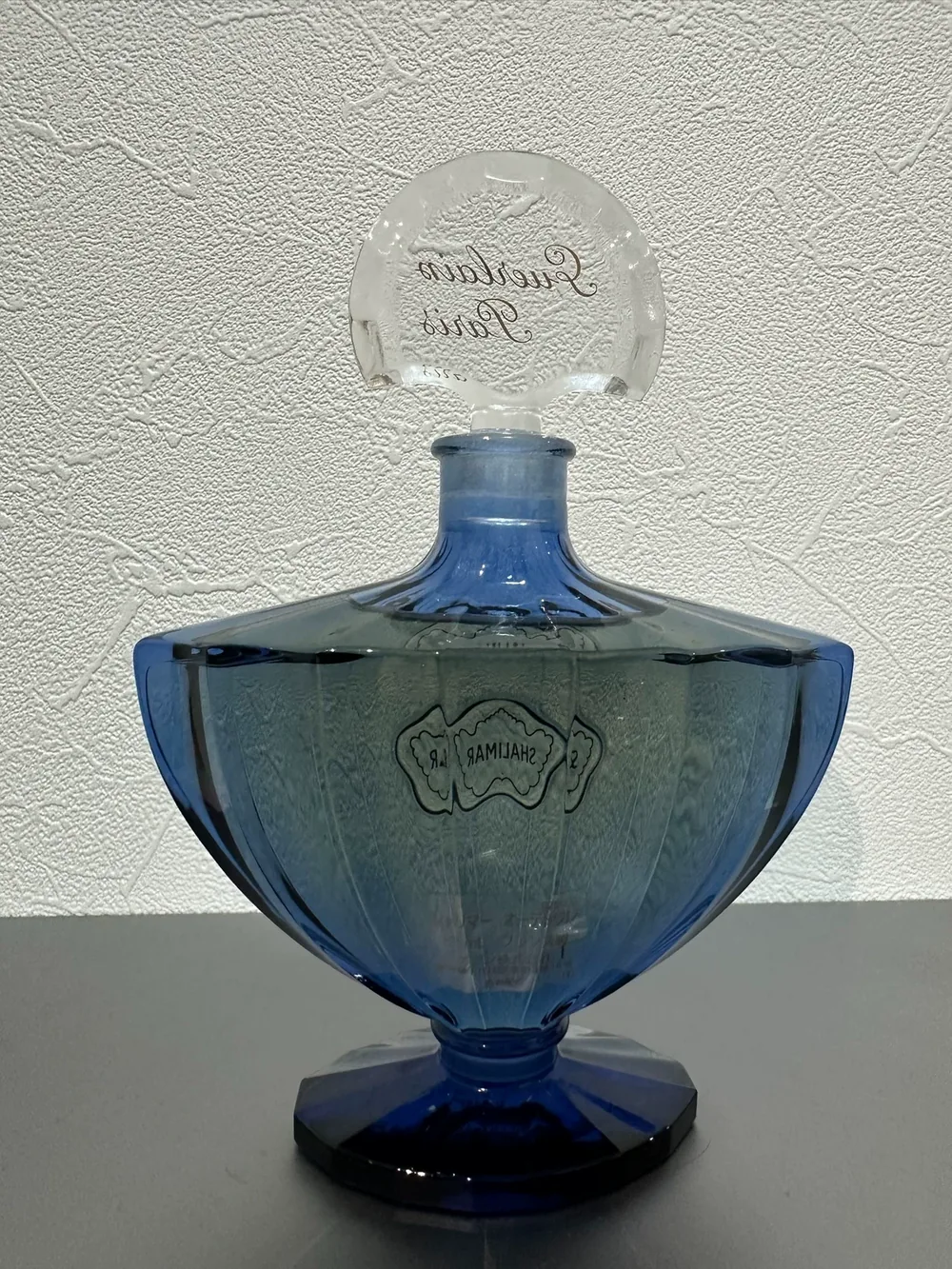
A decant without a record is an anonymous liquid. Label every vial with:
- Fragrance name, brand and concentration.
- Source bottle batch code, transcribed exactly.
- Date of decanting.
- Volume, as measured.
- Source, if the bottle came from a third party.
Write the batch code, not just the name. If a split participant later wants to compare against another bottle, the code is the only reference that identifies which production run the juice came from.
Use a label that does not dissolve in ethanol spillage. A strip of laboratory tape written in permanent marker is adequate; a paper label with water-based adhesive is not.
What decanting does to the fragrance
- Oxidation accelerates. A decant has a high surface-to-volume ratio and a fresh headspace. The aldehyde autoxidation measured in the literature — fragrant aldehydes reacting with atmospheric oxygen — proceeds faster in a small container with proportionally more air. Expect top notes to fade sooner in a 5 ml vial than in a 100 ml bottle.
- Ethanol loss. Even through a good seal, small volumes lose a measurable fraction of ethanol over months. Where a decant is stored long-term, check the level and reseal rather than assuming the seal is intact.
- No improvement. Decanting does not improve a fragrance. If the aim is to "let it breathe" or to "fix" a bottle that smells harsh, transferring it is more likely to damage it than to help. Maceration happens in the bottle with the original headspace; a decant only adds exposure.
Splitting practice
- Agree the split in writing: bottle, volume, per-participant share, cost basis including shipping and materials, and what happens if a vial leaks in transit.
- State the batch code and the source of the bottle in the listing. Buyer confidence rests on the record, not on the description of the scent.
- Declare that the contents are a decant. Selling a decant as a full retail product misrepresents the item, and it is a bad idea regardless of what any local rule says.
- Alcohol-based liquids are classified as dangerous goods for air transport. Many carriers restrict them. Check the rules before promising a shipping method, and pack glass vials with padding and a secondary sealed bag.
The short version
Glass, filled nearly full, sealed tightly, labelled with the batch code and the date, stored upright and dark. Everything else follows from those five points.
Sources
- "Oxidative degradation of fragrant aldehydes. Autoxidation by molecular oxygen", Tetrahedron (2013): https://www.sciencedirect.com/science/article/pii/S0040402013000756
- "Chemical Stability of Cosmetic Ingredients: Mechanisms of Degradation and Influencing Factors" (2025) — temperature and light effects on cosmetic ingredients: https://www.researchgate.net/publication/393613478_Chemical_Stability_of_Cosmetic_Ingredients_Mechanisms_of_Degradation_and_Influencing_Factors
- Regulation (EC) No 1223/2009 on cosmetic products (ethanol-based fragrance as a cosmetic; transport of alcohol-based liquids is governed separately by dangerous-goods rules): https://eur-lex.europa.eu/eli/reg/2009/1223/oj
Related reading
- Storing your fragrance collection properly
- Reading perfume batch codes
- Kilian Angels' Share, a release frequently traded as decants
Written by Perfume Codex Editorial. Compiled from manufacturer documentation, publicly published batch-code references, and our own recorded transaction data (26,000+ fragrance listings, 4,600+ recorded sales) in Hong Kong. Reformulation and discontinuation claims are cited to sources.